What It Actually Costs to Run a Ghost Kitchen (Monthly Breakdown)
The honest answer to what does a ghost kitchen cost to run is: less than a restaurant, and more than the pitch decks tell you. There’s no dining room to build out, no front-of-house to staff, no $40,000 in tables and chairs. But once you’re open, the monthly ghost kitchen cost stack has a few lines that don’t exist for a dine-in spot — and one of them quietly grows every week if you’re not watching it.
Here’s the real breakdown of where the money goes each month, roughly in order of size, and which lines you can actually do something about. Every market is different, so these are ranges and shares, not a quote — treat them as the shape of the P&L, not the exact numbers for your city.
The monthly cost stack
| Monthly cost | Typical share of revenue | You control it? |
|---|---|---|
| Food (ingredients) | 28–35% | Yes — most of all |
| Delivery-app commission | 15–30% of each order | Barely |
| Labor | 25–35% | Somewhat |
| Commissary / kitchen rent | Varies widely by market | No (it’s fixed) |
| Packaging | 3–6% | Yes |
| Everything else (utilities, insurance, POS, marketing) | 5–10% | Some |
Add those up and you see the problem immediately: two of your biggest lines — the app commission and the rent — are things you mostly don’t control. That’s what makes the food line so important. It’s the largest cost you can actually move, and it’s the one that decides whether the rest of the math works.
Rent is real, but it’s fixed
Most ghost kitchens run out of a commissary — a shared, licensed commercial kitchen you rent by the hour, the month, or as a dedicated stall. What that costs swings enormously: a few hundred dollars a month for shared off-hours access in a smaller market, up to several thousand for a dedicated space in a major metro. Purpose-built ghost-kitchen operators (the ones that rent you a pod plus delivery logistics) usually sit at the higher end and take a slice of sales on top.
Here’s the thing about rent, though: it’s fixed, and you signed it already. Once the lease is set, staring at it doesn’t change it. It sets the volume you need to break even, and after that it’s a constant. That’s why the smart operator spends almost no energy on the rent line after signing and almost all of it on the lines that move every single week.
The commission is the line that surprises people
A third-party delivery commission runs somewhere in the 15–30% range of each order, depending on the app and your plan. It comes off the top — before food, before packaging, before you’ve paid for anything. We walked through exactly what that does to a single ticket in the ghost kitchen food cost breakdown: the menu price you see is not the money you keep.
At the monthly level, this is the line that makes ghost-kitchen math unforgiving. If a quarter of every dollar leaves before you buy an ingredient, your food and labor have to fit inside a smaller pie than a restaurant’s. You can shave it a little — running your own pickup/website orders, negotiating a lower-commission tier at volume — but mostly it’s a cost of playing on the apps, and you have to build a menu that survives it.
Labor and packaging: smaller, but yours
Labor in a ghost kitchen is leaner than a full restaurant — no servers, no host, no bar — but it’s still a top-three cost, and it scales with how complex your menu is. A tight menu of items that share prep is cheaper to staff than a sprawling one.
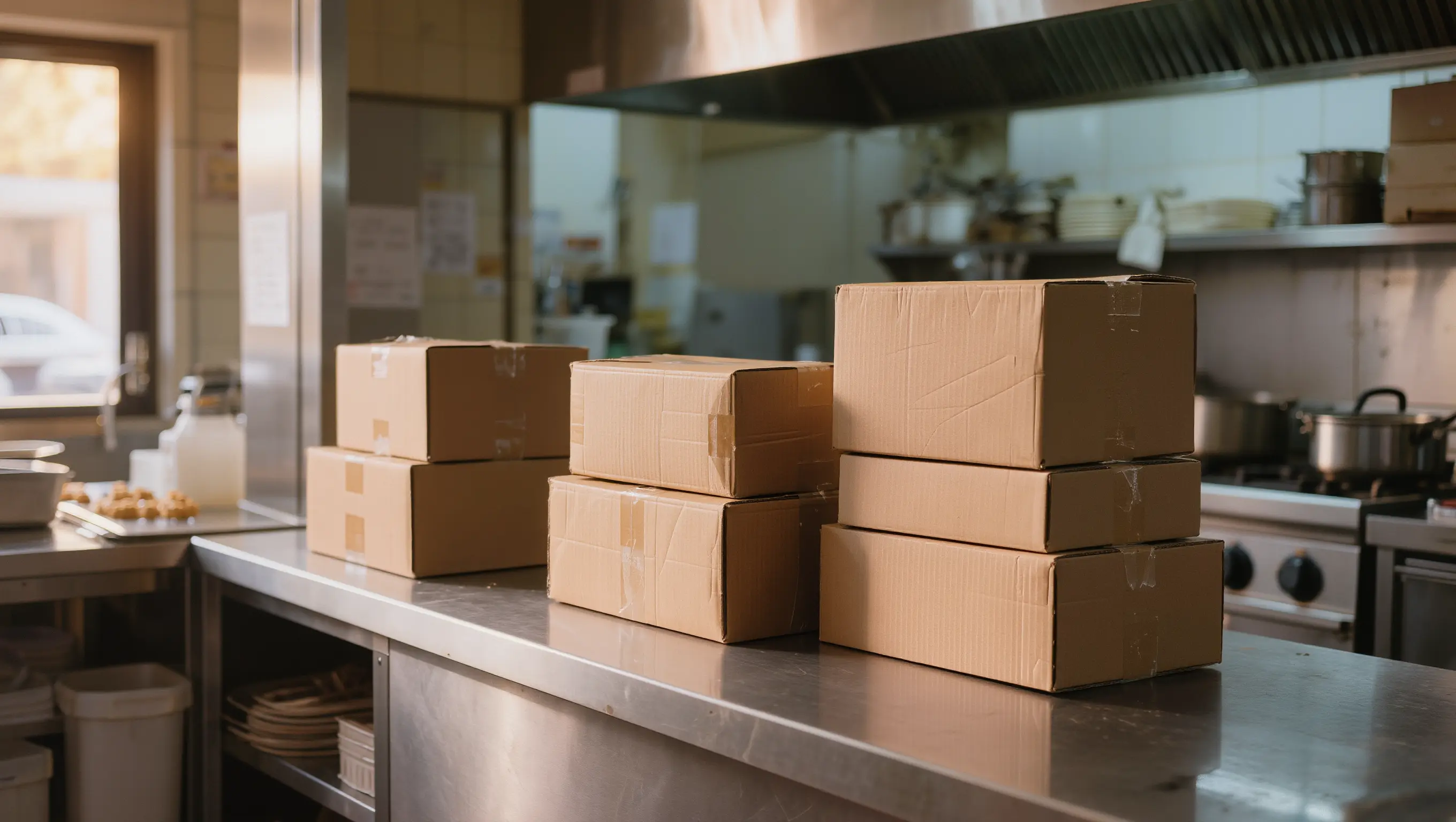
Packaging is the line dine-in operators barely think about and delivery operators can’t ignore. The clamshell, lid, sauce cup, bag, and cutlery on a single order often run $0.60–$1.00 — and at delivery volume that’s a real monthly number. Right-sizing the container and buying by the case instead of the sleeve is one of the few clean wins you fully control.
Food cost is the lever — because it’s the one you can actually pull
Look back at the table. Rent is fixed. Commission is mostly out of your hands. Labor moves slowly. The line you can change this week, on every order, is food.
That’s not a small lever, either — food is your single biggest controllable cost, and in a delivery-only model it has to survive the commission coming off the top first. A ghost kitchen that lets its food cost drift from 30% to 34% hasn’t lost four points of one line; it’s lost four points of the thinnest, most-fought-over pie in the business. That’s often the whole profit.
And food cost drifts on its own if nobody’s watching — the same way it does in a busy restaurant that still isn’t making money. The protein portion creeps up an ounce. The supplier’s price ticks up and the invoice doesn’t announce it. You’re running the same twenty items hundreds of times a week, so a small miss doesn’t stay small.
Do this before you sign anything
If you’re pricing out a ghost kitchen, run the numbers in this order — cheapest, most-controllable lever first:
- Cost your menu net of commission. Take the menu price, subtract the app’s cut, then cost food and packaging against what’s left. That’s your real margin per order. Do it in the free food cost calculator before you commit to prices.
- Know your fixed nut. Add up rent, insurance, POS, and any fixed platform fees. That’s the revenue floor you have to clear every month before you make a dollar.
- Divide. Fixed nut ÷ margin per order = the number of orders a month you need just to break even. If that number scares you, fix the menu math before you sign the lease — not after.
The honest catch
You can build this whole picture by hand on a slow afternoon, and you should before you commit. The trouble is that it doesn’t stay built. Rent holds still, but food and packaging prices move constantly, and in a ghost kitchen you’re running the same handful of items at volume — so the day your costs drift, nothing in the dining room tells you, because there is no dining room. Just tickets, and a smaller deposit two weeks later.
That’s the whole reason Mise exists. We keep every item costed against the prices you’re actually paying — automatically, from your receipts — and flag the plate that drifted before a thin delivery margin turns negative. On ghost-kitchen economics, the fixed costs are set the day you sign; the food line is the one you have to keep honest forever.
But you don’t need us to start. Cost one order net of the app’s cut, add packaging, and figure out how many of those it takes to cover your rent — see what your menu actually costs →
Built by people who’ve worked the line, signed the leases, and stared at the books. We help independent food businesses know what every dish actually costs — and what to do about it.