Why Your Busy Restaurant Still Isn’t Making Money
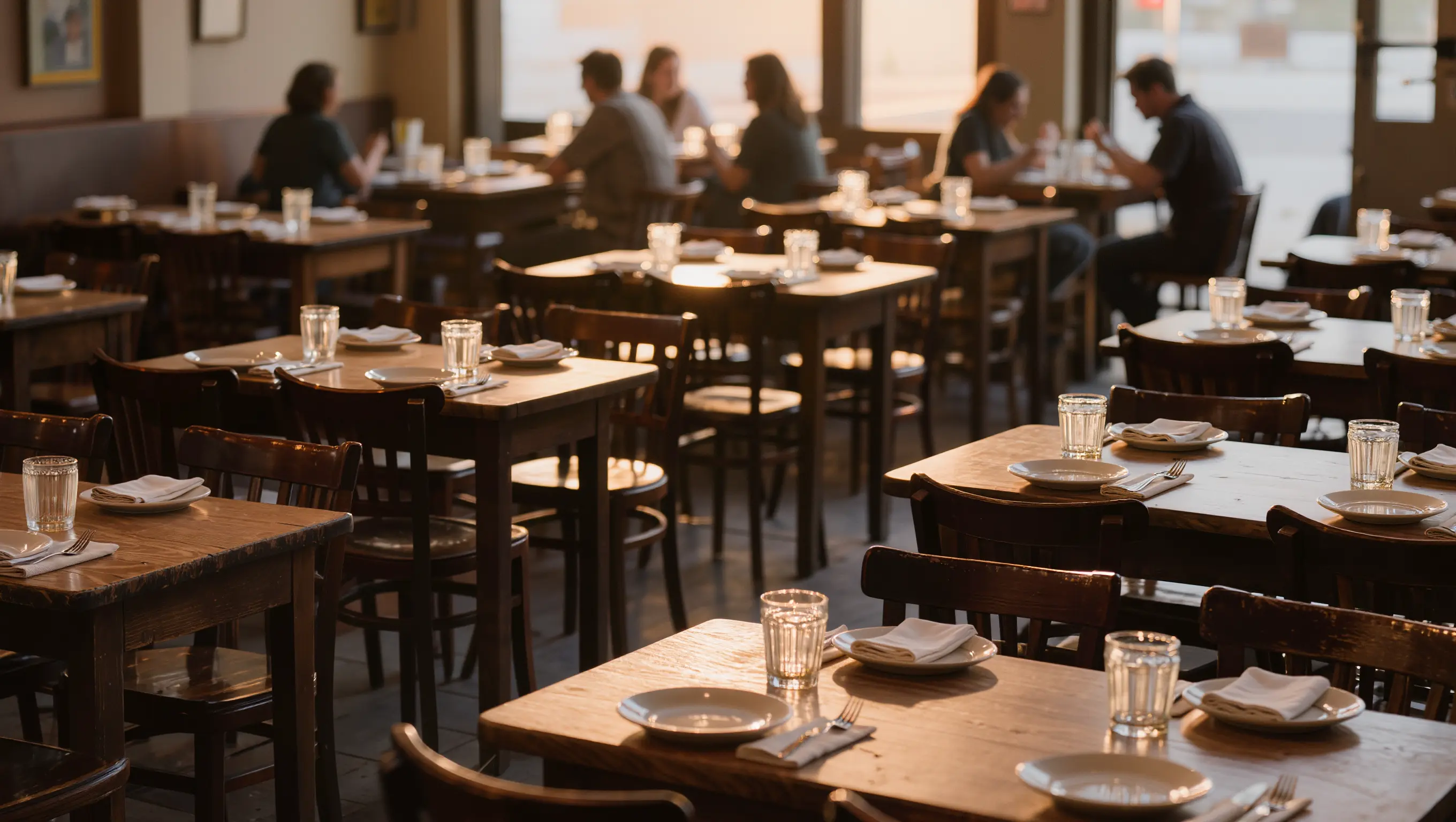
You’re busy. The dining room fills up, the tickets don’t stop, the team is moving all night. By every visible sign, things are working. And then the month closes, you look at what’s left, and it isn’t there. Not the way it should be for how hard everyone worked. You were full. So where did it go?
This is one of the most disorienting things about running a restaurant, because every instinct says busy equals good. More covers, more revenue, more money. But revenue isn’t profit, and a busy restaurant isn’t automatically a profitable one. Sometimes a busy restaurant is just a very efficient machine for losing money a little faster — because volume doesn’t fix bad per-dish economics. It multiplies them.
That’s the idea this whole piece is built on, so it’s worth sitting with for a second.
Volume multiplies whatever the dish already does
Every plate that leaves your kitchen either makes money or loses it. Not “the restaurant” — the plate. The specific dish, at its specific cost, sold at its specific price. If a dish earns three dollars, selling a hundred of them earns you three hundred. If a dish quietly loses forty cents — because its real cost crept past what you think it costs — then selling a hundred of those loses you forty dollars, and a busy night just means you lose it faster.
This is why “we just need more customers” so often fails as a fix. If the per-dish math is wrong, more customers pour more volume through the same broken economics. The busiest dishes — your best sellers, the ones you’re proud of, the ones moving all night — are exactly the ones where a small hidden cost does the most damage, because the leak is multiplied by the thing you’re most successful at.
So the real question isn’t “how do we get busier.” You’re already busy. The question is: do you actually know what each dish costs and what each dish earns? And for most independent operators, honestly, the answer is no — not because they’re careless, but because the number is genuinely hard to keep, and it moves.
Why almost nobody knows their real per-dish cost
It’s not for lack of trying. Plenty of owners costed their menu once — when they opened, or when a spreadsheet felt like the responsible thing to build. The problem is that a per-dish cost is not a fact you establish once. It’s a moving number, and four different things keep moving it, usually all at the same time and usually invisibly.
Understanding those four is most of the battle, because once you can see them, you can find them. Each one has its own post if you want to go deeper, but here’s the whole map in one place.
Leak one: the portion you eyeball
The single biggest cost in most dishes is the protein, and the protein is the one thing in the kitchen measured by feel. Tongs, a glance, done. “A glance” is not a fixed weight, and over a few busy weeks a portion drifts heavier without anyone deciding it should — a new hire who plates generously, a rush where everyone’s moving fast.
On paper the dish costs what it always did. The dish leaving the kitchen costs more, every plate, and the only place it shows up is the bottom line. We took this apart in detail — the most expensive thing on your menu is the one you eyeball — and walked through how to audit your portions without stopping service, because this is the leak that’s both the most common and the most fixable, and it’s free to fix.
Leak two: the supplier who raised a price and didn’t tell you
Nobody calls to say they’re charging you more. The price goes up as a slightly bigger number on an invoice you have four seconds to sign, and it flows straight into every dish that uses that ingredient — while your menu price sits still. A five percent bump on one staple feels like nothing and comes straight out of margin on every plate that uses it.
It hides well, and it wears disguises: a straight price rise, a pack that quietly shrank, a “comparable” substitution, a new fee at the bottom of the slip. We covered why it never announces itself and exactly how to read an invoice to catch it.
Leak three: the sauces and sub-recipes nobody counted
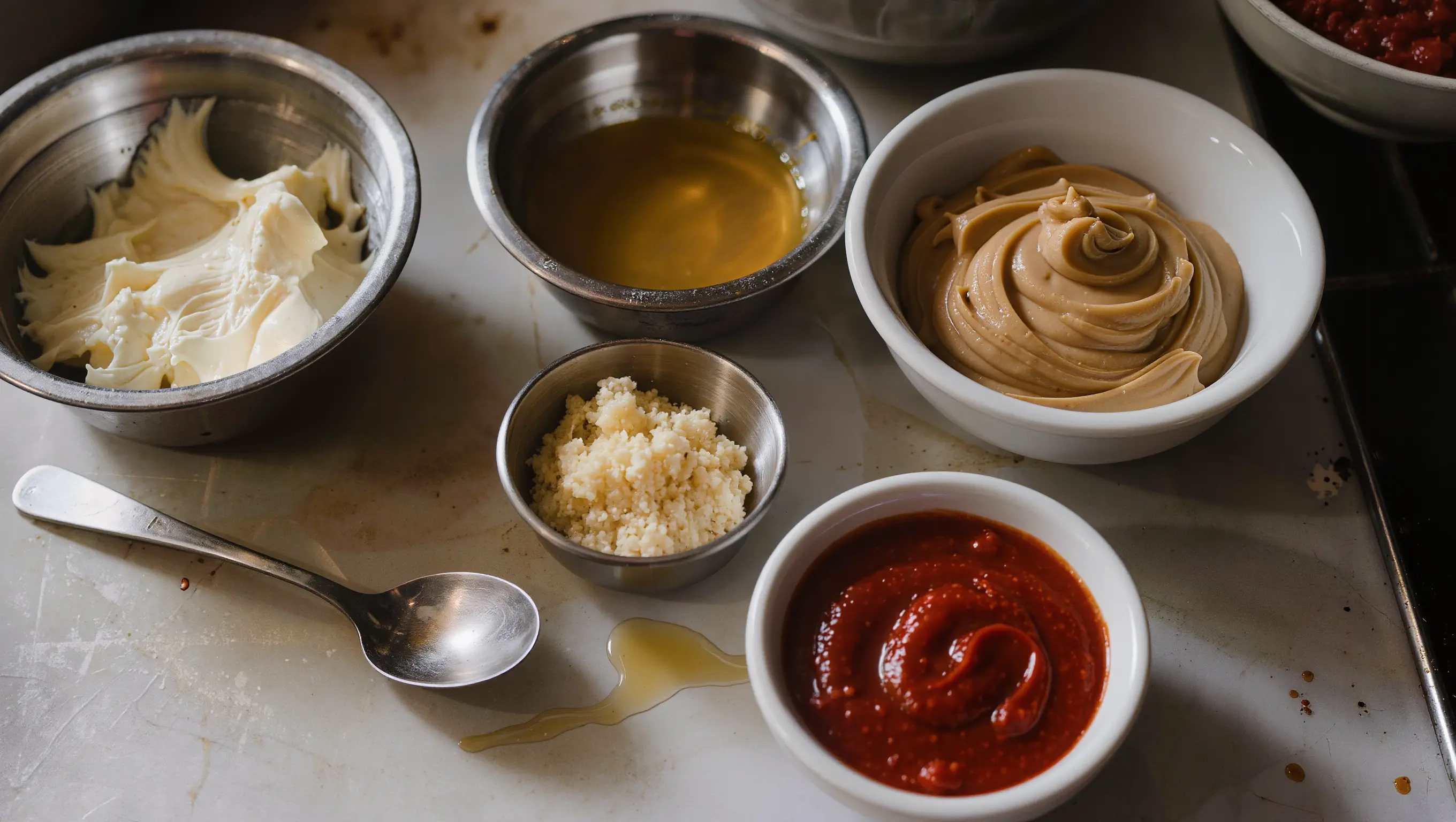
When you cost a dish, you count what you buy. The things you make — the garlic sauce, the tahini, the marinade, the spice mix — tend to vanish from the math, because they never arrived as a finished product on an invoice. Each one is a few cents per dish, which is why nobody bothers. But a single plate stacks three or four of them, plus a dip on the side, and the whole stack got priced as if it were free. We costed it out in the sauce that’s quietly eating your margin.
Leak four: the part you throw in the bin
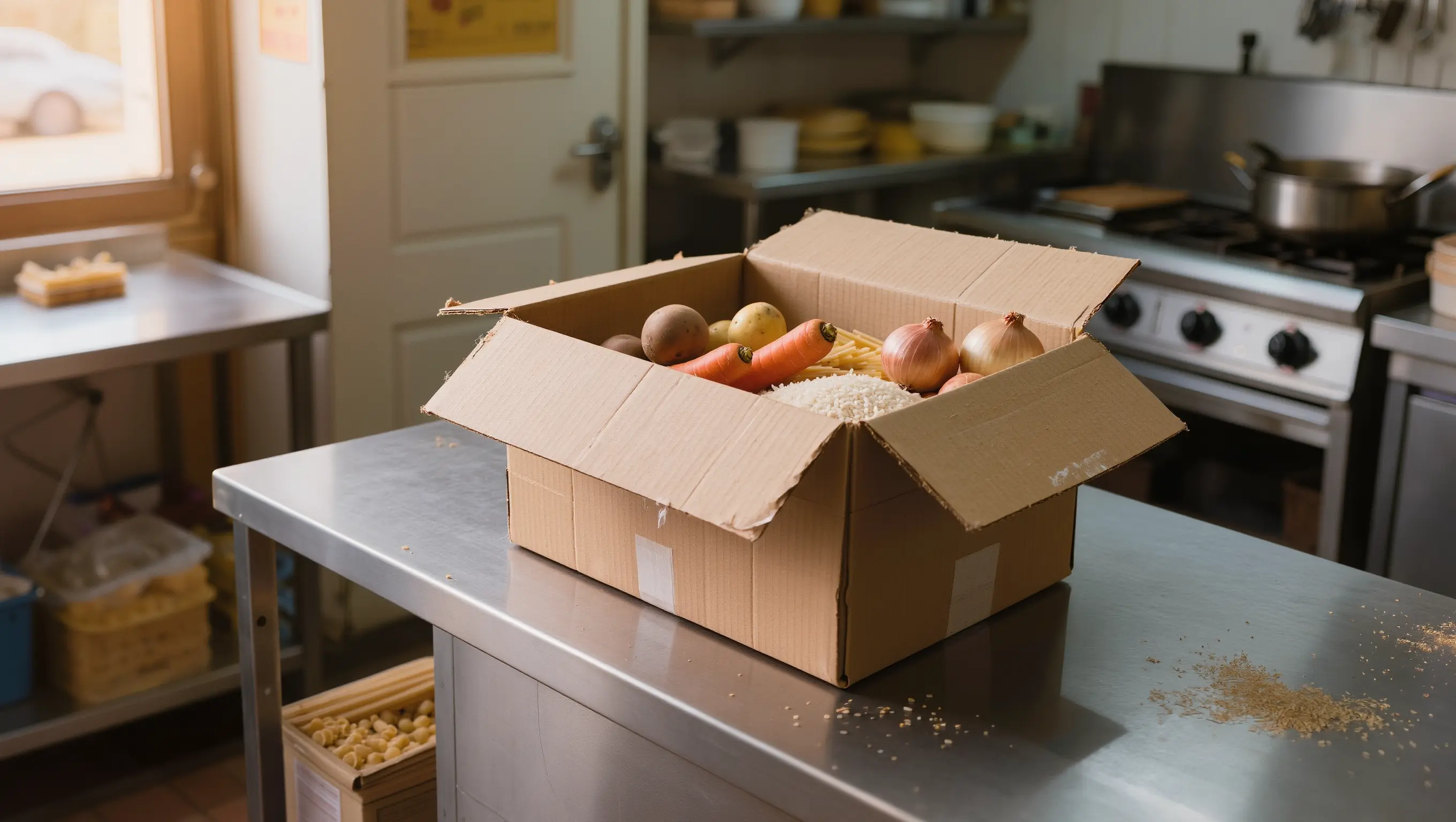
The price on the invoice is for what you bought, not for what you can actually use. Trim, peelings, cooking loss, the spoilage at the back of the walk-in — your usable yield is always less than what you paid for, sometimes much less, which means your true cost per usable kilo is higher than the number on the slip. It’s the quietest leak of the four because it never touches a plate at all; it leaves before service even starts. (Its own post is coming.)
The number you’re feeling is a symptom
Here’s what ties all four together. None of them shows up as itself. They show up, blended and anonymous, as one number drifting in the wrong direction — your food cost percentage, creeping up a point or two with no obvious cause. We wrote a whole piece on this — why your food cost % crept up but nothing “changed” — because it’s the trap that sends good operators toward the wrong fix.
The percentage tells you that you’re bleeding. It does not tell you where the cut is. And the instinct it triggers — I guess I need to raise prices — is almost always wrong as a first move, because you’d be repricing the entire menu to fix a leak that lives in one or two specific dishes. You have to go down to the dish to find the real cause. Only the dish tells you which leak you’re actually dealing with, and therefore which fix to reach for.
The fix hierarchy: why repricing is the last lever, not the first
This is the heart of it, and it’s where Mise takes a position that a lot of “restaurant pricing” advice doesn’t. When you find a dish whose cost has crept past where it should be, raising the menu price is the last thing you reach for, not the first. There are three cheaper, lower-risk levers ahead of it, and a good operator works them in order.
1. Tighten the portion and improve the yield. This is first because it’s the most common cause and the cheapest fix — usually free. Over-portioning and trim waste are silent margin killers, and correcting them changes nothing the customer sees. Right-size the portion, cut the waste, and a lot of dishes are fixed right here without another step.
2. Switch or renegotiate the supplier. If the portion’s tight and the dish still bleeds, the cost of an input probably moved. That’s a supplier-level problem with a supplier-level fix: call the rep, ask what holds the old price, price-check one alternative, look at a substitute or pack size. The conversation is free and it’s often all it takes.
3. Reformulate the recipe, gently. Where the dish allows it, a small change — a different cut, a rebalanced ingredient, a right-sized sauce pour — can close the gap without the customer noticing. The customer tastes the whole dish; they’re not auditing the components.
4. Reprice — last, and deliberately. Only when the first three can’t close the gap. And when you do reach it, you reprice the specific dishes that need it, not the whole menu out of fear, and you do it knowing you’ve earned the decision — which means you can stand behind it.
The reason the order matters is that repricing is the lever everyone reaches for first, because it’s the one you can pull from the office without changing anything in the kitchen. It’s also the one most likely to cost you customers. Get the first three right and you’ll be surprised how rarely you need the fourth. That’s the difference between protecting your margin and just charging your regulars more — and it’s the whole philosophy Mise is built around. We’re not pricing software. We help you find the money you’re leaving on the table, and give you a menu of ways to recover it that don’t start with a price hike.
Why this is so hard to do by hand
If you’ve read this far, you can already see the shape of the work: know the real cost of every dish, keep it current as portions drift and supplier prices move and sauces get rebuilt, watch the food cost on your top sellers, and act on the specific leak when one opens. Done by hand, that’s a recurring job nobody has time for. You can cost your menu in a heroic weekend, and it’s accurate for about a week, because the prices underneath it keep moving. The discipline isn’t the problem. The time is.
That’s the whole reason Mise exists. You snap a photo of each supplier receipt as it comes in. We read every line, remember what every item and pack cost last time, and update the real, current cost of every dish — and every sauce inside every dish — against the prices you’re actually paying. When a dish’s cost crosses a line you care about, you get a notification while you can still do something about it.
We’ll be straight about what that does and doesn’t catch, because we’d rather be useful than oversell. Mise keeps the cost side honest automatically — supplier moves, sub-recipe costs, the price-driven leaks — so when your numbers drift, you can instantly rule those in or out. The one leak no software can catch for you in a cash kitchen is the portion, because that lives on your line where no receipt can see it. What we do is narrow the search: if a dish is climbing and the prices behind it haven’t, that’s your signal to go weigh a few plates. We tell you where to look. You and a scale do the rest.
Where to start
You don’t need us to begin, and you shouldn’t wait for us to. Pick your three highest-volume dishes — the ones carrying the most weight, where any leak is multiplied the most. Cost them honestly against this week’s prices. Weigh what’s actually going on the plate. Add up the sauces. You will almost certainly find at least one dish that isn’t earning what you thought, and you’ll have found it before you ever touched a menu price.
Then fix it in order: portion first, supplier second, recipe third, price last. That’s how a busy restaurant turns its volume back into profit instead of multiplying a leak.
And if you want all of it kept current automatically — every dish, every sauce, every supplier price, watched for you so you know exactly which plate to check next — see what your menu actually costs →
Built by people who’ve worked the line, signed the leases, and stared at the books. We help independent restaurants know what every dish actually costs — and what to do about it.