Trim Waste: The Cost You Throw in the Bin
Every other margin leak shows up on a plate. This one shows up in the bin. It’s the quietest of them all because it leaves your kitchen before service even starts — the trim, the peel, the cooking loss, the spoiled corner at the back of the walk-in. You paid for all of it. You can’t sell any of it. And almost nobody counts it when they work out what a dish costs.
The trap is simple: the price on your invoice is for what you bought. Your real cost is for what you can actually use. Those are not the same number, and the gap between them is yield.
What yield actually does to your cost
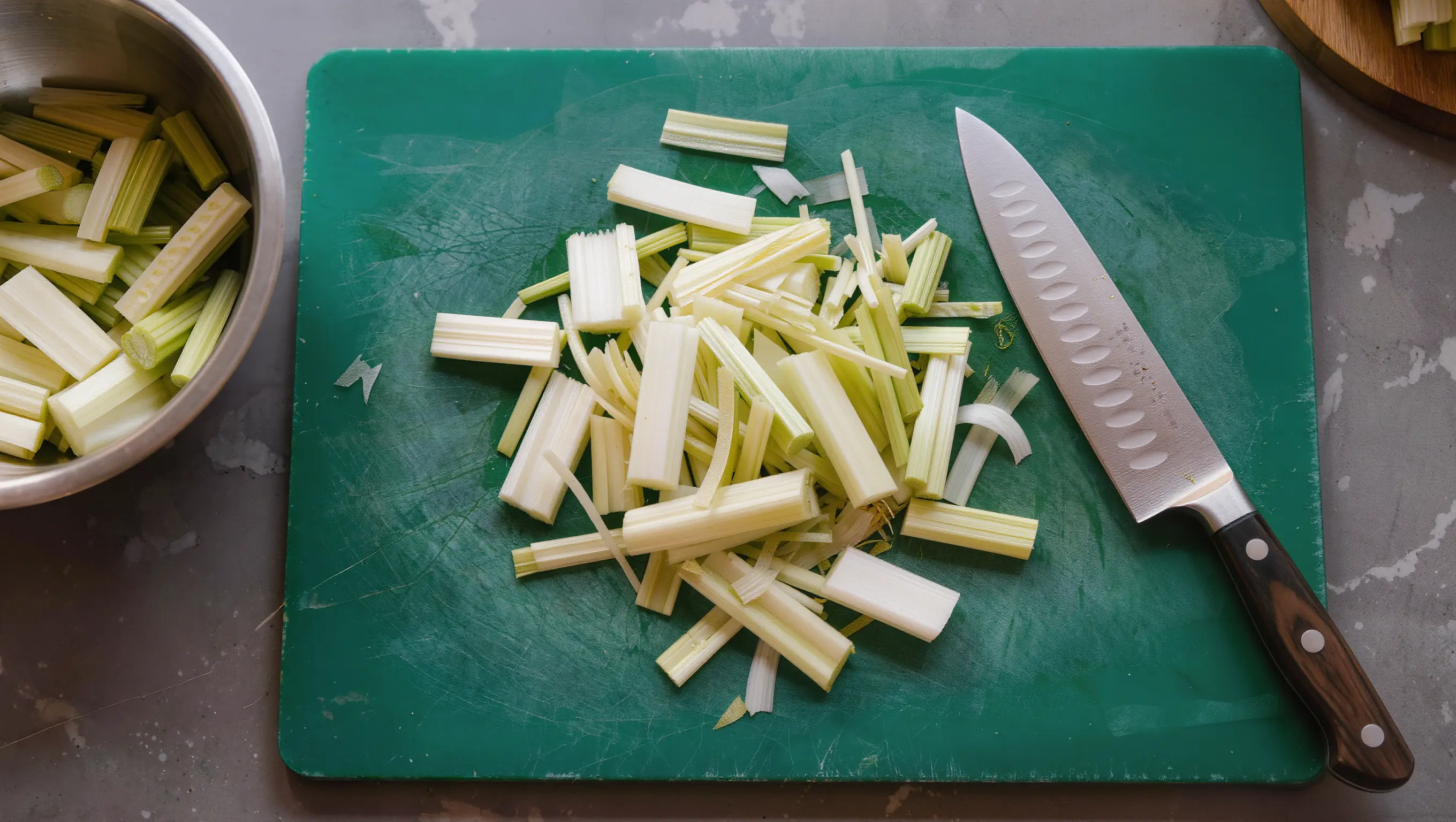
Say you buy a case of a vegetable at $4.00 a kilo. Feels like a clean number. But you trim it, peel it, cut off the ends and the bad bits — and a fifth of it goes in the bin before it ever touches a pan. You didn’t get a kilo of usable product for your $4.00. You got 800 grams.
So your real cost isn’t $4.00 a kilo. It’s $4.00 divided by the 0.8 kilo you can actually use — which is $5.00 a kilo. A quarter more than the invoice said, on every single order, forever. And that’s the number that should be going into your dish cost, not the invoice price. Use the invoice price and every dish built on that ingredient is undercosted by 25% on that line, and you’d never know, because the waste happened in prep where no one was counting.
It gets sharper with proteins, because they lose weight twice — once to trimming, and again to cooking. A cut that loses a fifth to trim and then another fifth to the grill or the oven has a usable yield well under two-thirds of what you bought. The invoice price and the true plated cost can be a third apart. On your single most expensive ingredient, that’s not a rounding error. That’s the difference between a dish that earns and one that doesn’t.
The three places it hides
Trim waste isn’t one thing. It’s three, and they stack:
- Trim and peel loss. The structural part — what comes off every time you break down the raw ingredient. This one’s predictable, which is good news: it’s the easiest to measure and account for properly.
- Cooking loss. What evaporates, renders, or shrinks on the heat. Also fairly predictable per item, and also routinely ignored when costing.
- Spoilage and over-prep. The avoidable part — what you prepped and didn’t sell, what wilted, what got pushed to the back and forgotten. Unlike the first two, this one swings with how you order and rotate, which means it’s the one you can actually shrink.
The first two you account for. The third you reduce. Lumping them together as “waste” hides which is which — and hides that two of them are a costing problem and one is an operations problem.
How to find it yourself
You don’t need software to get an honest yield number on your big ingredients. You need a scale and one prep session.
- Weigh what you start with. Before you break down an ingredient, weigh the raw amount.
- Weigh what you end with. After trimming and peeling — and for proteins, after cooking a test batch — weigh what’s actually usable.
- Do the division. Usable weight ÷ raw weight is your yield. If a kilo in gives you 750 grams usable, that’s a 75% yield.
- Correct your real cost. Divide the invoice price by the yield to get your true cost per usable kilo. That’s the number that belongs in your dish cost. Do this once for each of your big-ticket ingredients and your whole dish math gets more honest overnight.
What to do once you’ve found it
Once you know your real yields, the fixes follow the usual order — and notice repricing is last:
- Tighten the yield itself. Better breakdown technique, a sharper trim that takes less usable product with the waste, cooking that loses less to shrink. This is lever one — improving yield sits right beside portion control as the cheapest, customer-invisible fix there is. Reducing spoilage by ordering and rotating tighter is pure recovered margin.
- Look at the supplier. Sometimes a different cut, grade, or a pre-trimmed option changes your effective cost per usable kilo — even if the headline price looks higher, a better yield can make it cheaper in real terms. Worth pricing out. This is where the invoice price genuinely lies and yield tells the truth.
- Reformulate to use the trim. The best kitchens turn yield loss into product — trim into stock, bones into soup, the odd ends into a staff meal or a special. Waste you sell isn’t waste.
- Reprice — last, only if the dish still can’t carry its honest, yield-corrected cost once the above are done.
The honest catch
Getting a true yield number on your main ingredients is a genuinely valuable afternoon, and the structural part — trim and cooking loss — stays fairly stable once you’ve measured it. But the cost underneath it doesn’t. Your yield on a protein might be a steady 65%, but the moment the supplier price moves, your true cost per usable kilo moves with it, and every dish built on that ingredient moves too. The yield’s the steady part; the price it’s multiplying is not.
That’s where Mise comes in. Once your real yields are set, we keep the cost side current automatically — when a supplier price shifts, the true per-usable-kilo cost updates, and every dish carrying that ingredient updates with it, against the prices you’re actually paying. You measure the yield once; we keep the moving number honest.
But you don’t need us to start. Weigh one big ingredient in and out, work out the yield, and recost your dishes on the true number instead of the invoice price. It’s the most undercounted cost in most kitchens, and it’s sitting in your bin right now. If you want the cost side kept current once you’ve done it — see what your menu actually costs →
Built by people who’ve worked the line, signed the leases, and stared at the books. We help independent restaurants know what every dish actually costs — and what to do about it.